

Product Voyagers is back, and it looks and thinks a little differently now, so before a single word, here's the whole thing on one page.
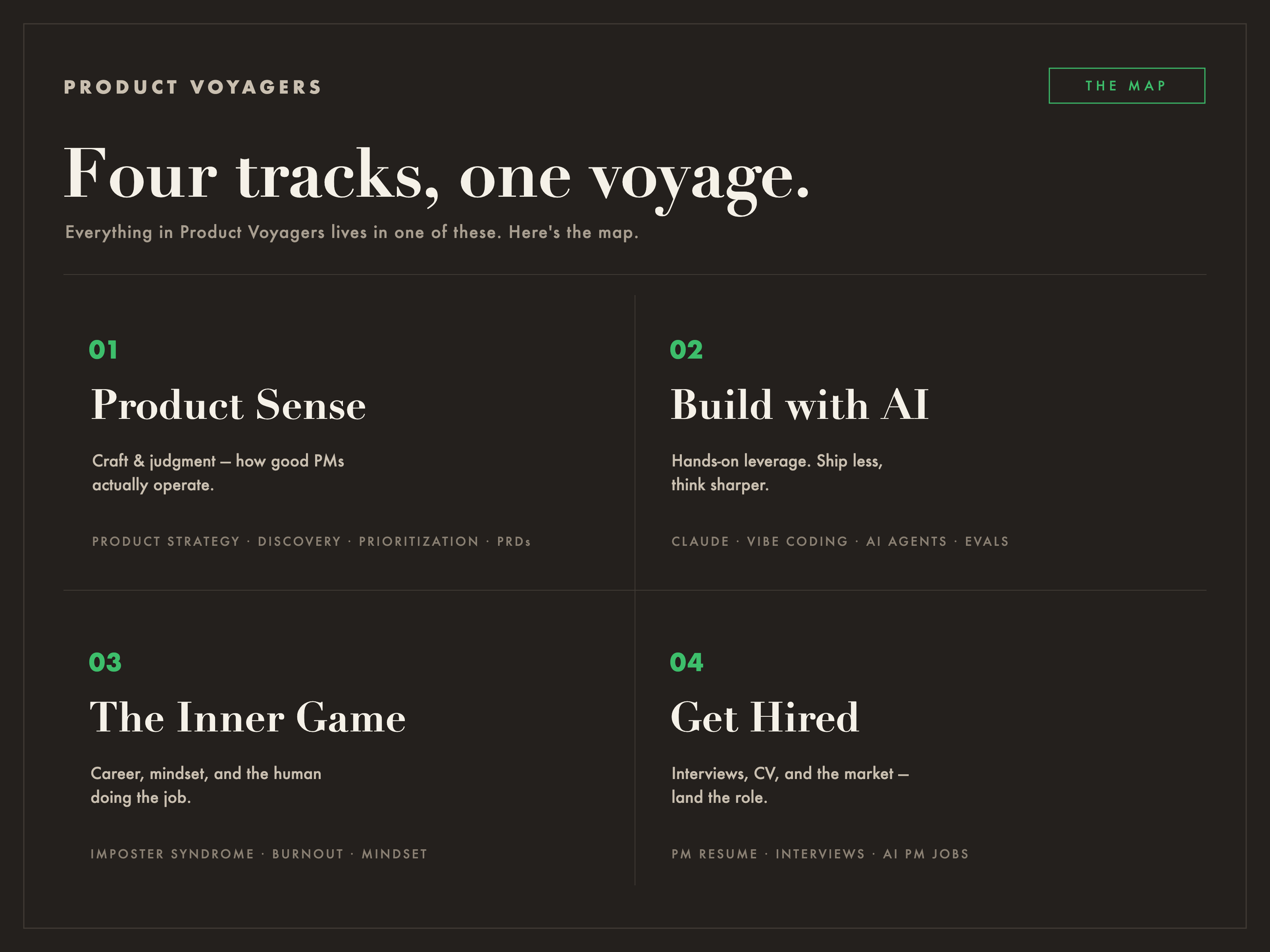
That’s the map. Four tracks, one newsletter, and a single idea underneath all of it, which is the reason I came back.
It got quiet here last year, and if you noticed your inbox go still, you weren’t imagining it, I stepped back on purpose because I could feel myself about to publish just to keep a schedule alive, and the internet already has more “five frameworks for prioritization, every Monday” than any of us will ever read. So the first change is the simple one: no fixed schedule, pieces go out when they’re genuinely worth your time, some weeks that’s twice and some weeks will be more.
The second change took me longer to say out loud.
For a decade, a good PM was mostly whoever could get the thing built, write the PRD, align everyone, unblock the engineers and ship, and that ability to execute was the moat.
That moat is draining now, because with AI you can stand up a prototype in an afternoon that used to eat a whole sprint, and once building gets close to free, being good at building slowly stops being the thing that sets you apart. What’s left is the part that never automated cleanly, deciding what to build and what to kill, knowing when to say no and holding that line when the room pushes back, telling a genuinely important problem from a merely loud one. That’s judgment, and it was always the real job, we just let execution hide how much of it was missing, and that’s why all of use need to be good (or actually strong with Evals).
Which is exactly why I rebuilt this whole thing, because if shipping isn’t really what you’re paid for anymore, then everything worth writing about fell into one of four places: the judgment itself, the leverage that made shipping cheap in the first place, the person you become once execution stops being your hiding spot, and the job market busy repricing all of it in real time. Those four places are the four tracks.
The four tracks
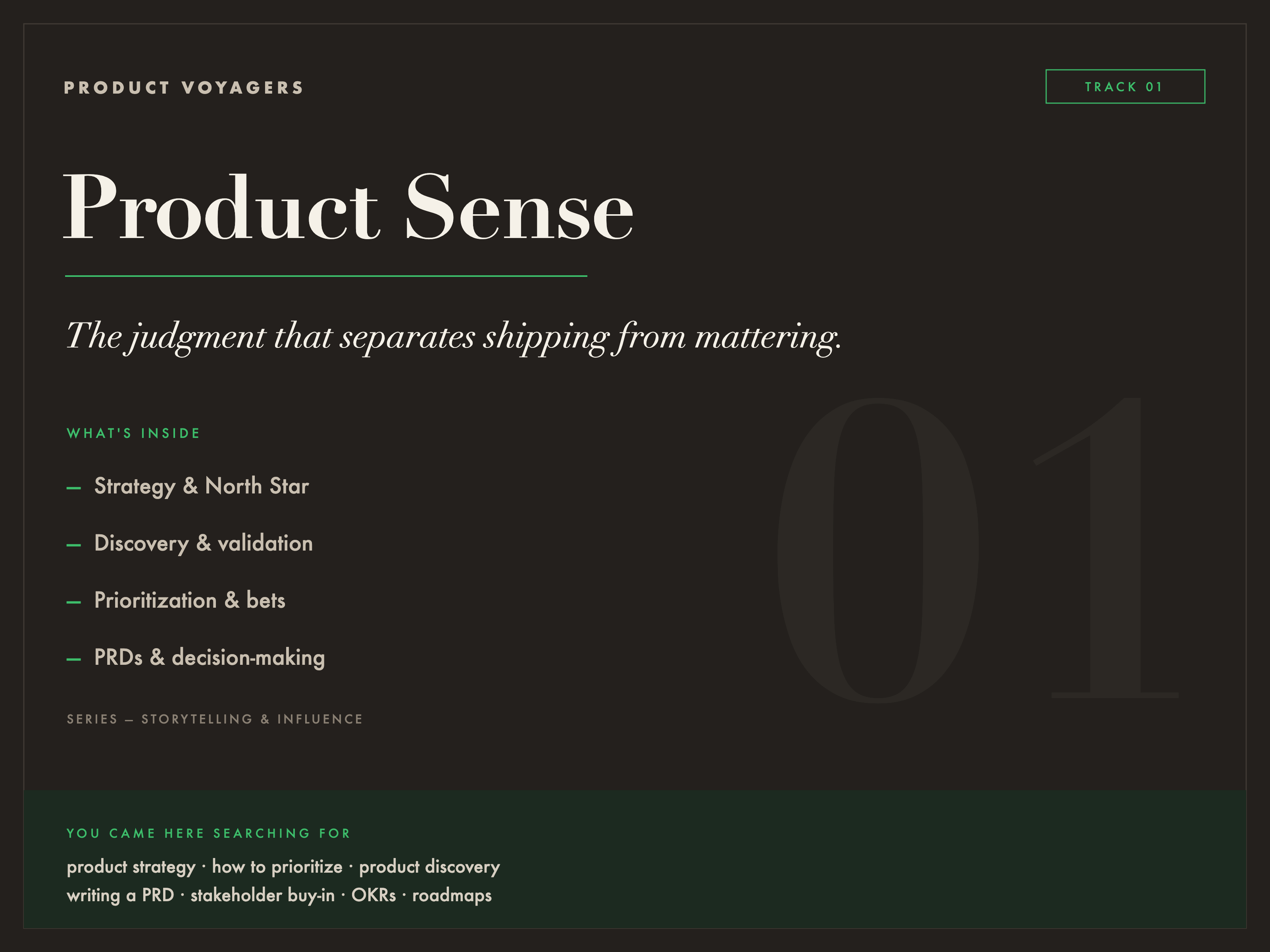
Product Sense. How good PMs actually decide, so product strategy, real product discovery, how to prioritize when everything is somehow “urgent,” and how to write a PRD that makes a call instead of hiding inside one.
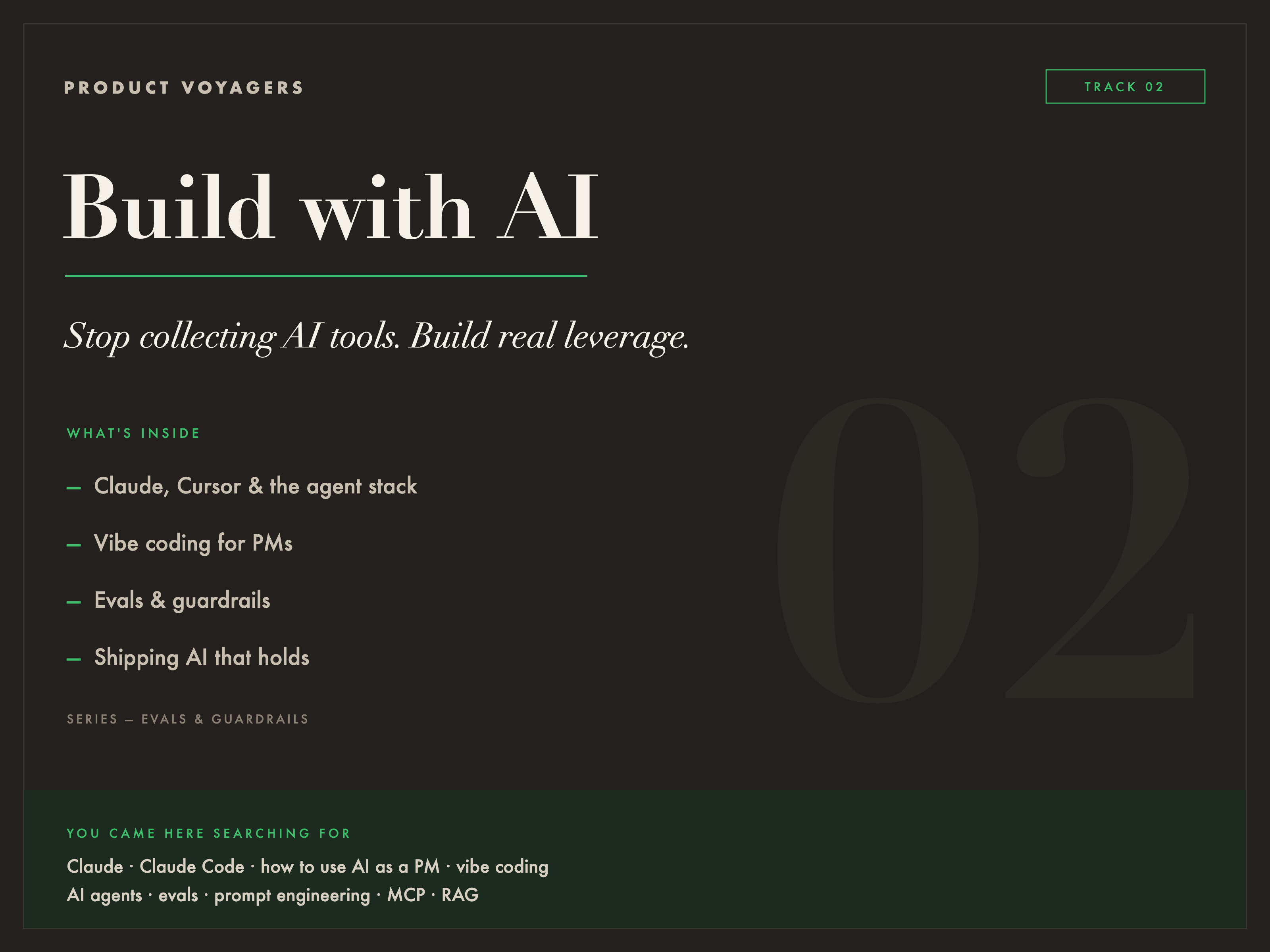
Build with AI. How to actually use AI as a PM without becoming the person who collects tools and ships nothing, so working with Claude and the agent stack, vibe coding when you don't write code, and the evals and guardrails that keep your AI feature from quietly breaking in production.
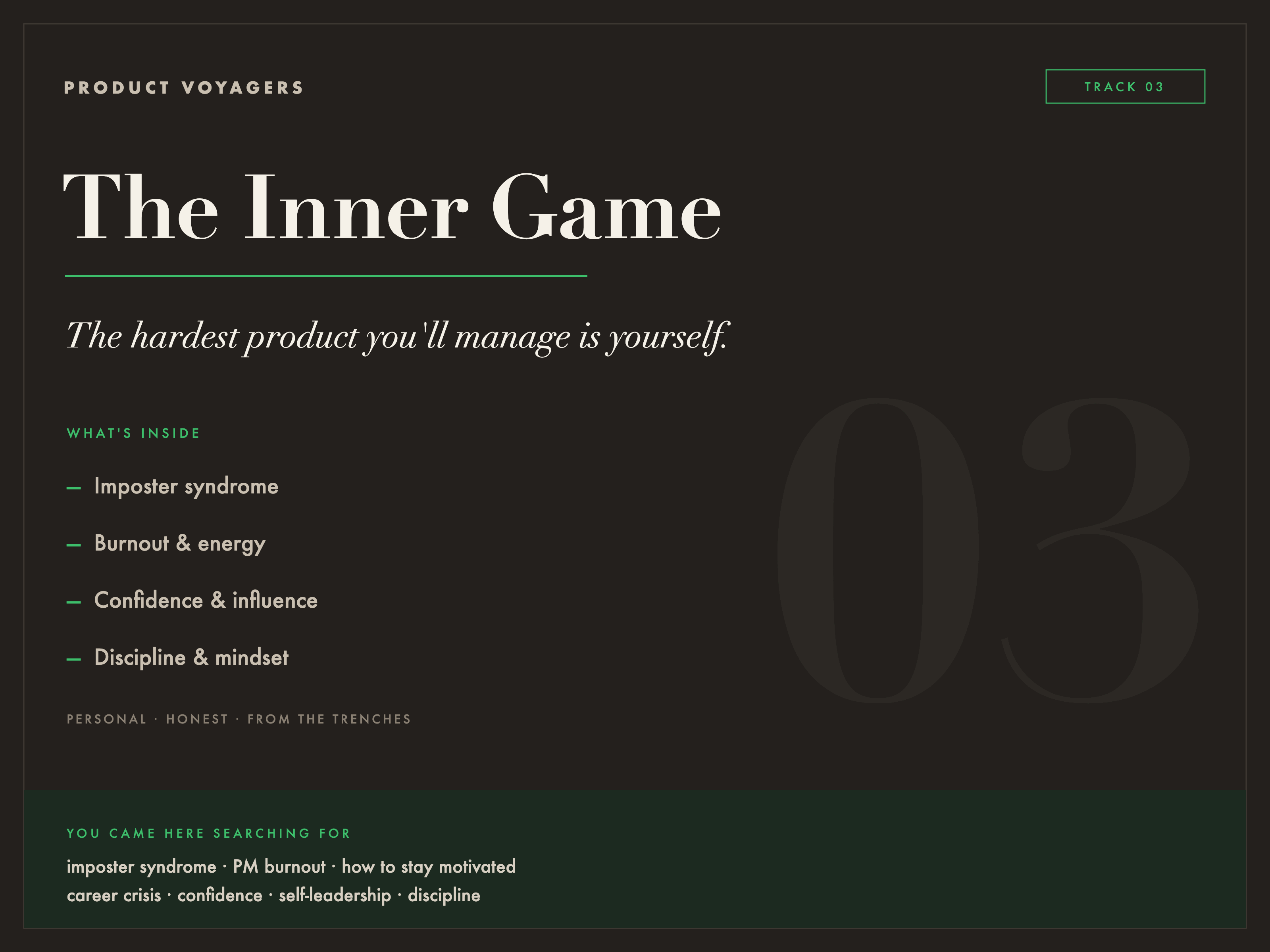
The Inner Game. The hardest product you'll ever manage is yourself, so the honest stuff, imposter syndrome in product management, burnout, and the mid-career moment where the roadmap for your own life just runs out.
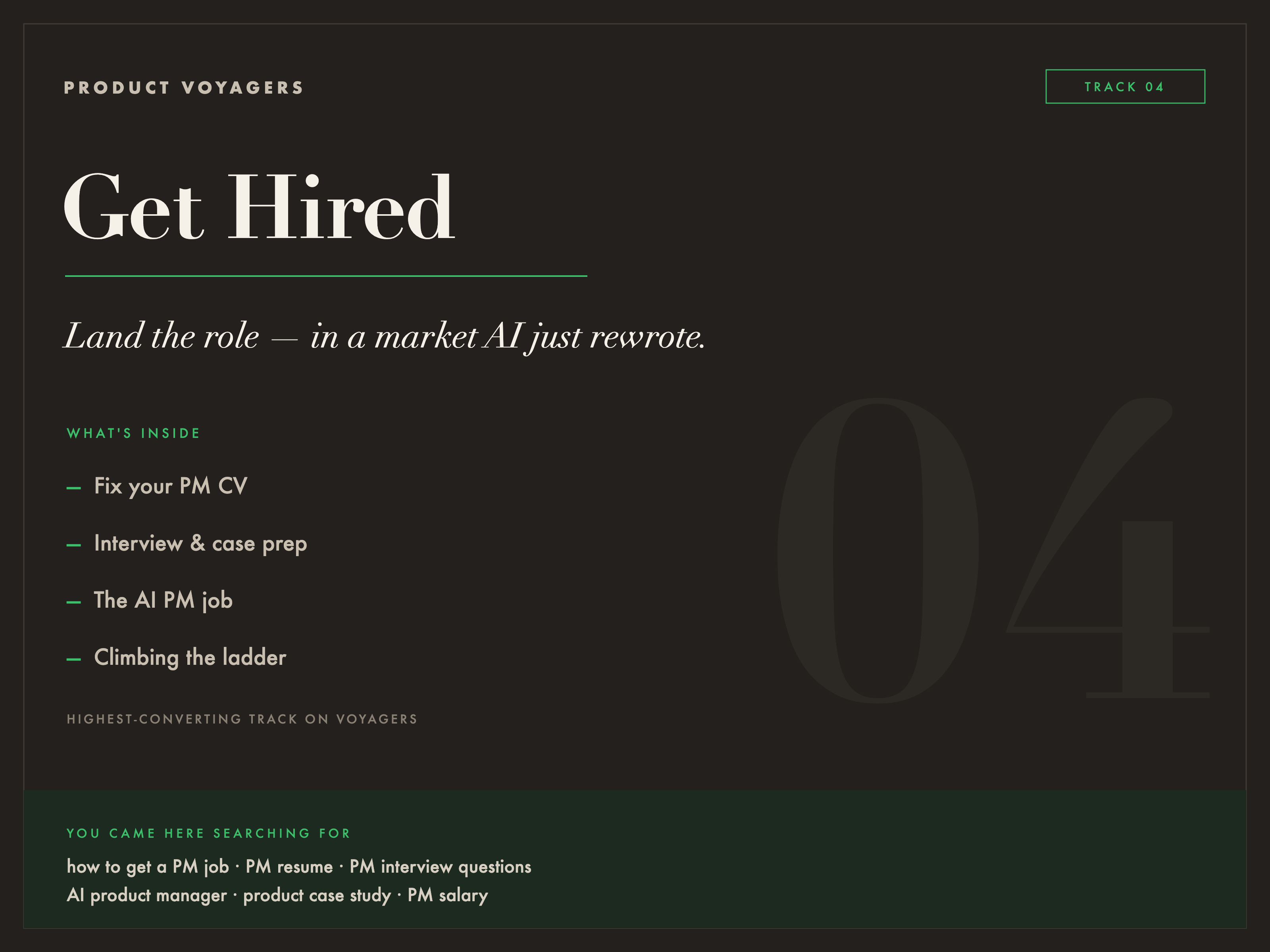
Get Hired. The market got strange, so how to fix a boring PM resume, how to prep for PM interviews and case studies, and how to read the new "AI Product Manager" role for what it really is, which is three different jobs wearing one title.
First out the gate
Mid-Career Crisis: The Roadmap Ends Here, the honest one.
Estimate Twice, Build Once, the full case for cheap building and expensive judgment.
The Skill.md You Installed Last Week, the Build with AI one you’ll want to forward.
Three Jobs, One Title: “AI Product Manager”, for reading this job market clearly.
I didn’t come back alone
A small crew of genuinely sharp PMs writes here now, and the courses and workshops run under the wider Product Voyagers crew and partenring with rituals.pm, live on Maven, online (Maven) and onsite (multiple-countries), with 20% off for paid subscribers, though I’ll save the details for their own post.
If you’ve been meaning to come back, welcome back, and if you’re new, pick a corner of the map and start there.
Subscribe, and I’ll see you out there.
— Wafaey on behalf of many other voyagers.